
Helicopter work needed for upcoming fish-survival study
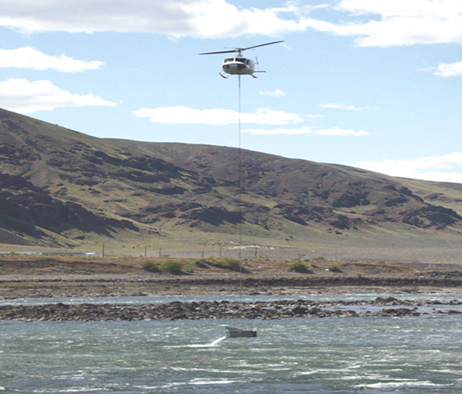 A special group of 3,600 “electronic” juvenile salmon and steelhead will get helicopter rides in late April through May to transport them on a special mission for re-release into the Columbia River.
The young fish are special for the valuable information they can provide Grant PUD biologists about fish behavior and survival as they make their way 58 miles downriver, past Grant PUD’s Wanapum and Priest Rapids dams and, eventually, to the Pacific Ocean.
The effort is part of a mandatory, 10-year survival study to ensure that at least 86.5% of these migratory fish make it safely past both dams. Similar studies will also occur in 2027 for juvenile sockeye salmon.
The smolt, each measuring from about 4 to 8 inches long, will be collected at Chelan County PUD’s Rock Island Dam and transported by truck downriver to Grant PUD’s fish tagging and husbandry facility located at Wanapum Dam. Once there, each fish will be examined and its condition documented. Each fish is then anesthetized and surgically implanted with an acoustic tag and held for a 48-hour recovery period prior to release into the river
Tagged – and now “electronic” – fish are then loaded into a “Fish Fly Tank,” suspended from a helicopter and transported for re-release. Fish will be released daily through the month of May, about a half mile below each of the Rock Island and Priest Rapids Dam tail races.
Special equipment called “receivers” are strategically placed throughout the 58 miles of river, from just downriver of 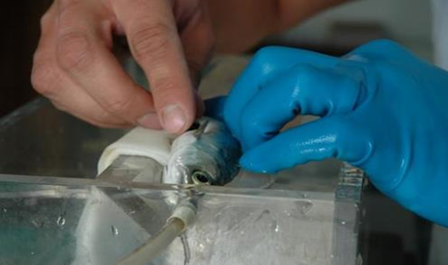 Rock Island Dam to the Hanford Reach area below Priest Rapids Dam. The receivers capture the signal of the acoustic tags as the fish migrate. The implanted tags send signals for about 30 days and are harmless to the fish, who live with them for the rest of their lives.
Earlier studies have shown that Grant PUD has met or exceeded these survival targets, called “performance standards,” for yearling Chinook, juvenile steelhead, and sockeye.
“Meeting performance standards for juvenile salmon and steelhead is extremely critical,” Tom Dresser, Grant PUD’s senior manager of Fish, Wildlife and Water Quality, said. “Failure to meet these standards could mean costly modifications to Grant PUD’s environmental-stewardship program or even operational changes at the dams. We take these 10-year check-ins very seriously.”
Frequently Asked Questions:
Will the helicopter release the fish during the day?
Yes. In May, you may see a helicopter transporting a suspended container bearing young salmon and steelhead for release below Rock Island and Priest Rapids dams on the Columbia River. The fish have been implanted with acoustic tags, so Grant PUD biologists can track their survival as they migrate downstream past the dams.
Why is it necessary to track fish survival?
Grant PUD has an environmental stewardship obligation to ensure that at least 86.5% of spring Chinook, and juvenile steelhead, summer sub-yearling Chinook and sockeye safely pass its dams as they migrate to the ocean to mature. These studies let us know if we’re meeting our targets.
What happens if Grant PUD fails to meet the survival standards?
Failure to meet the survival standards could mean costly modifications to Grant PUD’s environmental-stewardship program or even operational changes or modifications at the dams that could reduce the amount of electricity generated.
What improvements have already been made to increase survival past the dams?
Grant PUD did extensive research between 1999 and 2014 to determine what capital and operational measures and programs were necessary to meet the survival standards. These protection and enhancement measures include:
1. Adding juvenile fish bypass systems – like giant “water slides” for juvenile fish – to ensure safer passage at both dams.
2. Developing “Fish Mode,” a safer way to operate the turbine/generator units at both dams to ensure the highest survival rates for the fish that pass the dams through the turbines.
3. Increasing predator controls at the dams and reservoirs to reduce the birds, fish and other natural predators who feast on the migrating smolts.
Who decides what measures to take if survival targets aren’t met?
Grant PUD, together with its partners on the Priest Rapids Coordinating Committee, use the most-current and best available scientific information and analyses to set the survival targets and devise strategies to boost performance, when necessary. The Coordinating Committee is made up of federal, state and tribal representatives.
When you subscribe to the blog, we will send you an e-mail when there are new updates.