
Citizen scientists join experts collecting native bees at Wanapum Overlook
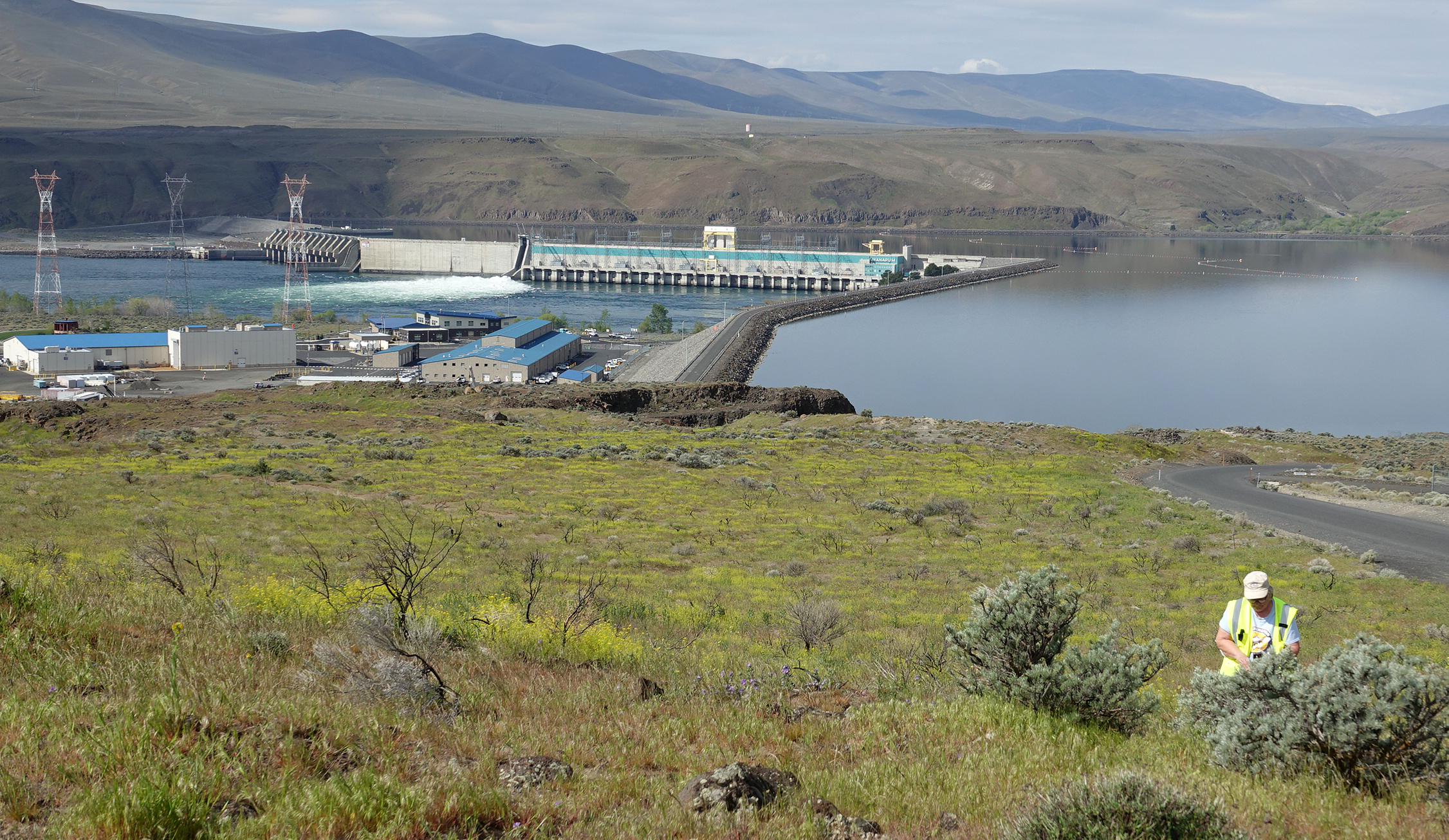
Volunteer bee collector Jan Dormaier inspects her net after collecting a native bee at Grant PUD’s Wanapum Overlook viewpoint. The viewpoint’s namesake dam is in the distance.
BEVERLY -- Wearing bright safety vests and toting big-mouthed nets, citizen-scientist volunteers joined experts April 10, combing the steep, rocky hills and early-spring desert blooms of Grant PUD's Wanapum Overlook for native bees, some no larger than a grain of rice.
“I grew up a bee-keeper’s daughter, so I’ve been taught to watch,” said volunteer and former science teacher Jan Dormaier. “It’s been a nice hobby for us to get out.”
Just uphill, her husband Roger Dormaier captured one of the tiny pollinators with a flick of his wrist and quick scoop of the net. Jan walked nearer and observed as he placed the bee, the underside of its abdomen covered in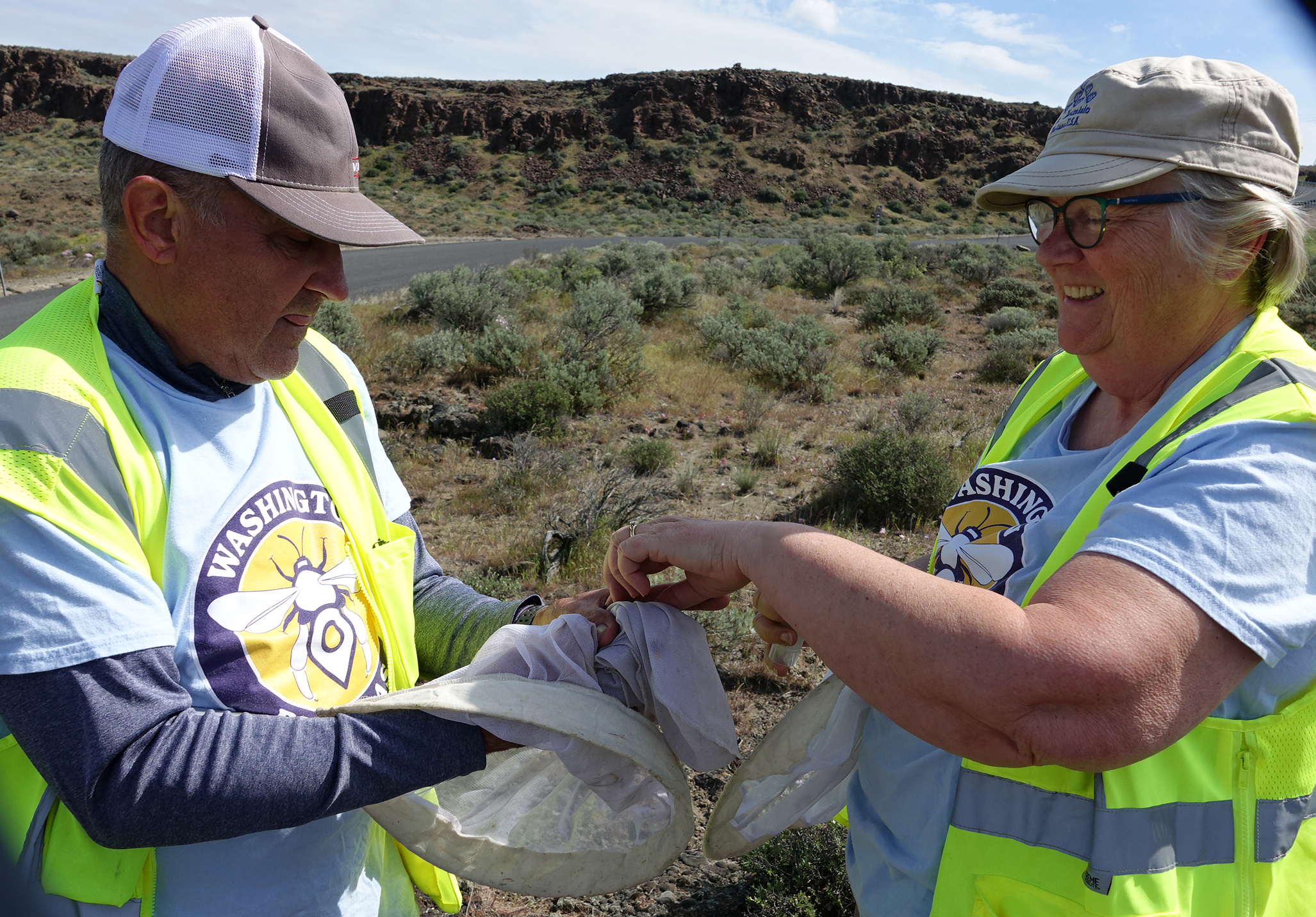 bright pollen, in a plastic vial.
The Dormaiers are retired cattle and wheat farmers from the Grand Coulee Dam area. They answered the state Department of Agriculture’s call for volunteers and received special training in bee identification – a “Master Melittologist” course from Oregon State University – to help start the “Washington Bee Atlas.”
The Bee Atlas project seeks to record, county by county, the estimated 600-700 native bee species thought to inhabit Washington, state Department of Agriculture spokeswoman Karla Salp said from the Overlook. Her family has a farm in nearby George.
The Overlook is one of 19 recreation areas that Grant PUD owns and manages for public access and enjoyment around its Priest Rapids and Wanapum dam reservoirs. The utility's own Fish and Wildlife staff support pollinator habitat by planting bee-loving plants along the shorelines.
Bees, butterflies, birds, insects and other pollinators are crucial to the ecosystem and agriculture. As they travel from flower to flower, they spread pollen from the male part of a flowing plant to the female part. Without them, plants can’t reproduce or grow fruits and vegetables.
The state legislature sanctioned the Bee Atlas survey in 2023 to gain more information about the state’s pollinators. Since 2024, volunteers have collected more than 17,000 specimens on more than 600 varieties of host plants. Of those, 30 were new or rare bee species, including 17 that were the first-known recordings in Washington. Another 12 species had not been recorded in the state in 50 years; one of those was last recorded in 1882.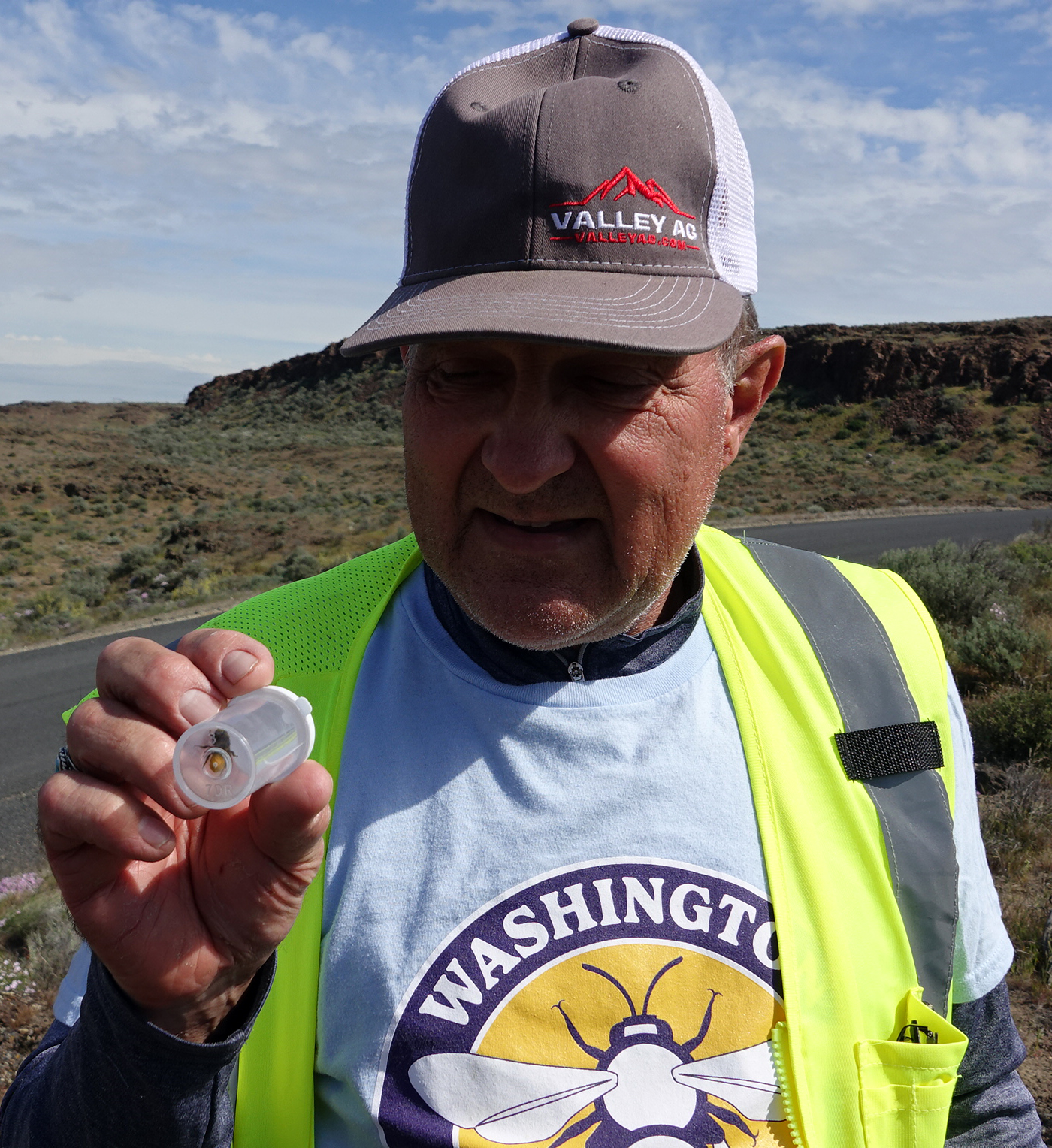
The greatest diversity of bees are expected in Central Washington, which contains vast areas of undisturbed desert sage and scrub that come alive with bee-attracting blooms every spring. Most bees love hot, dry weather and have adapted to thrive in the dry region’s microclimates.
“Little research has been done since the late 1800s or early 1900s,” Salp said. “Many parts of the state are under sampled. Grant County has a huge amount of bee diversity.”
Volunteers primarily collect native bees, not honey bees, which are non-natives that have been introduced to the continent, Salp said.
Natives vary in size and color. Some are tiny and lightning fast. Most live in the ground or in cavities under rocks. They’re loners compared to their social, honey-making counterparts and live in small numbers rather than densely populated hives. All female bees lay eggs.
“I like to say that all female solitary bees are queens,” said Joel Gardner, insect museum collection manager at Washington State University, who joined the collection group at the Overlook. “We’re trying to establish a baseline about how our native bees are doing.”
Volunteers collect all the bees they can during an outing and record the location, date and type of flower that attracted each bee. Different species emerge in the same areas at different times of the year, so it will take many years to complete the survey, Salp said.
The captured bees are euthanized, mounted, labeled and sent to the state Department of Agriculture to be identified by experts. Some species can often only be distinguished under a microscope or by analyzing their DNA, she said. The sa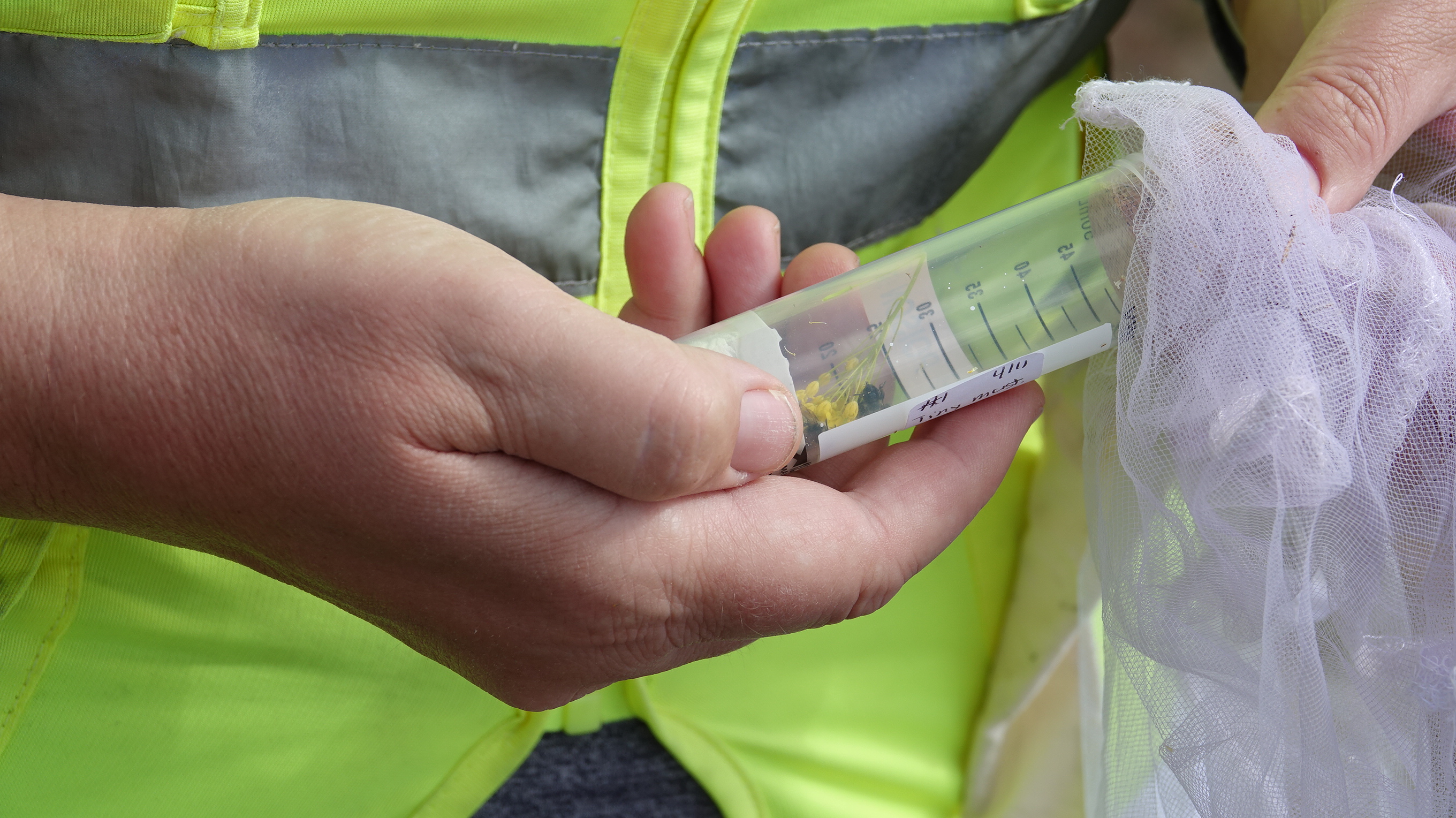 mples are then kept in WSU’s insect collection.
“These samples could be around for a hundred years or more to help future researchers learn more about the state’s native bees,” she said.
“I used to think it was sad to catch them and have to kill them,” volunteer Jan Dormaier said. “But we’re only out here today. Birds eat a lot more every day than we capture, and we’re citizen scientists. We’re contributing to the science.”
The state Department of Agriculture is still seeking volunteers to help with the Bee Atlas. To learn more about the project, visit afr.wa.gov/beeatlas. To learn more about the collection results, so far, read the latest news released here
-- Christine Pratt, Grant PUD External Affairs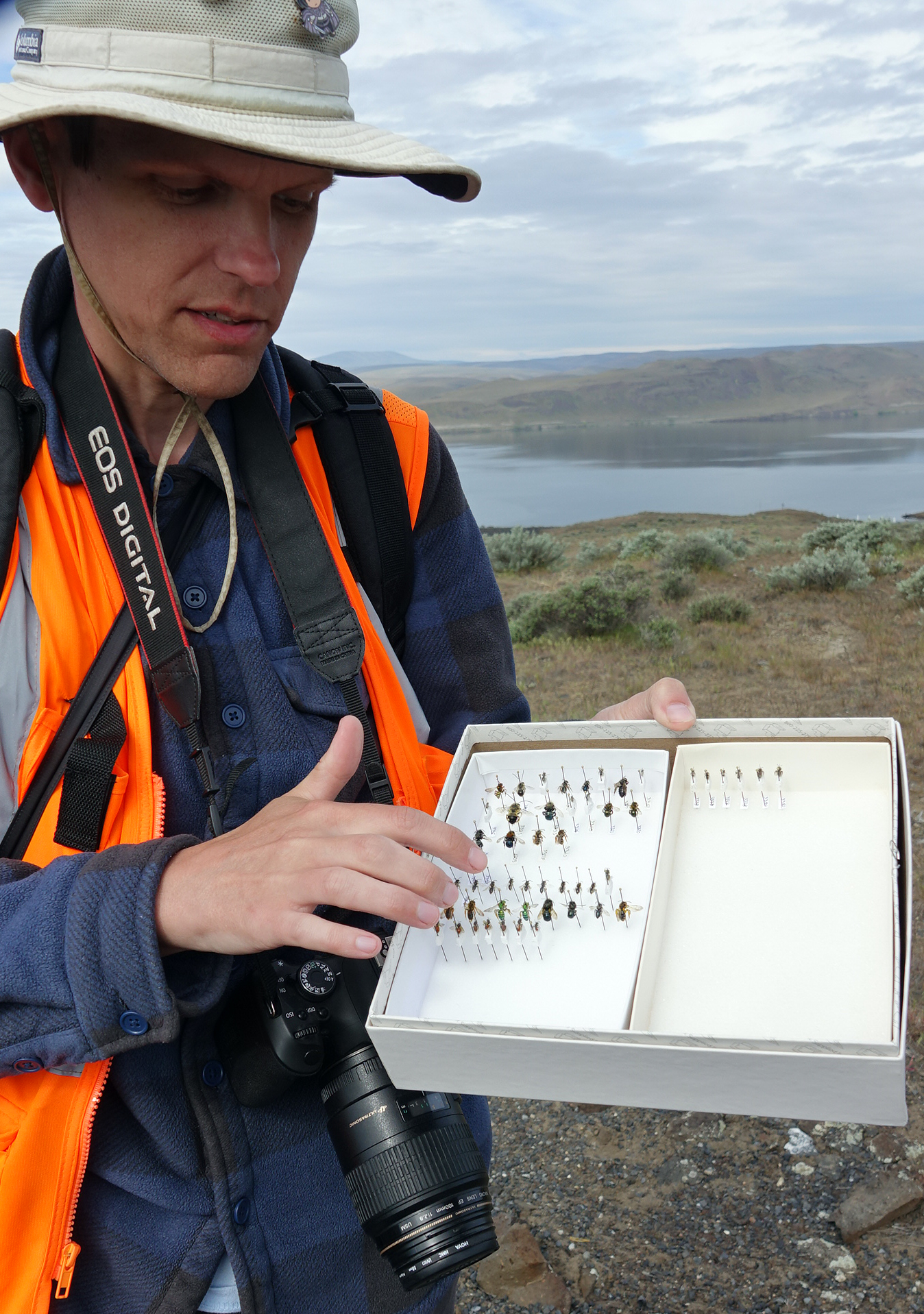
Above, left: Joel Gardner, insect museum collection manager at Washington State University, describes some of the native bees collected and mounted for future research.
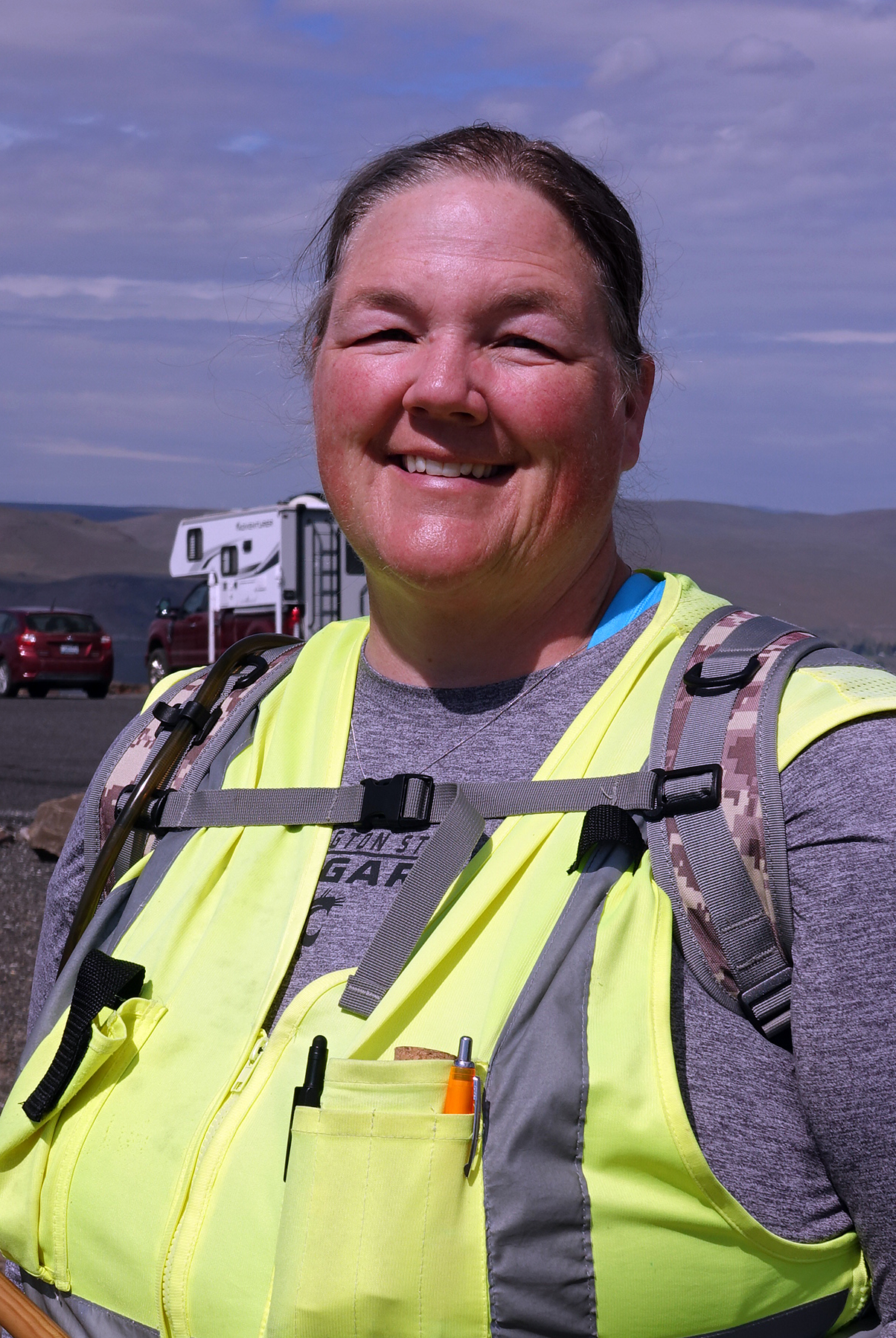
Above, right: Karla Salp, spokeswoman for the state Department of Agriculture.
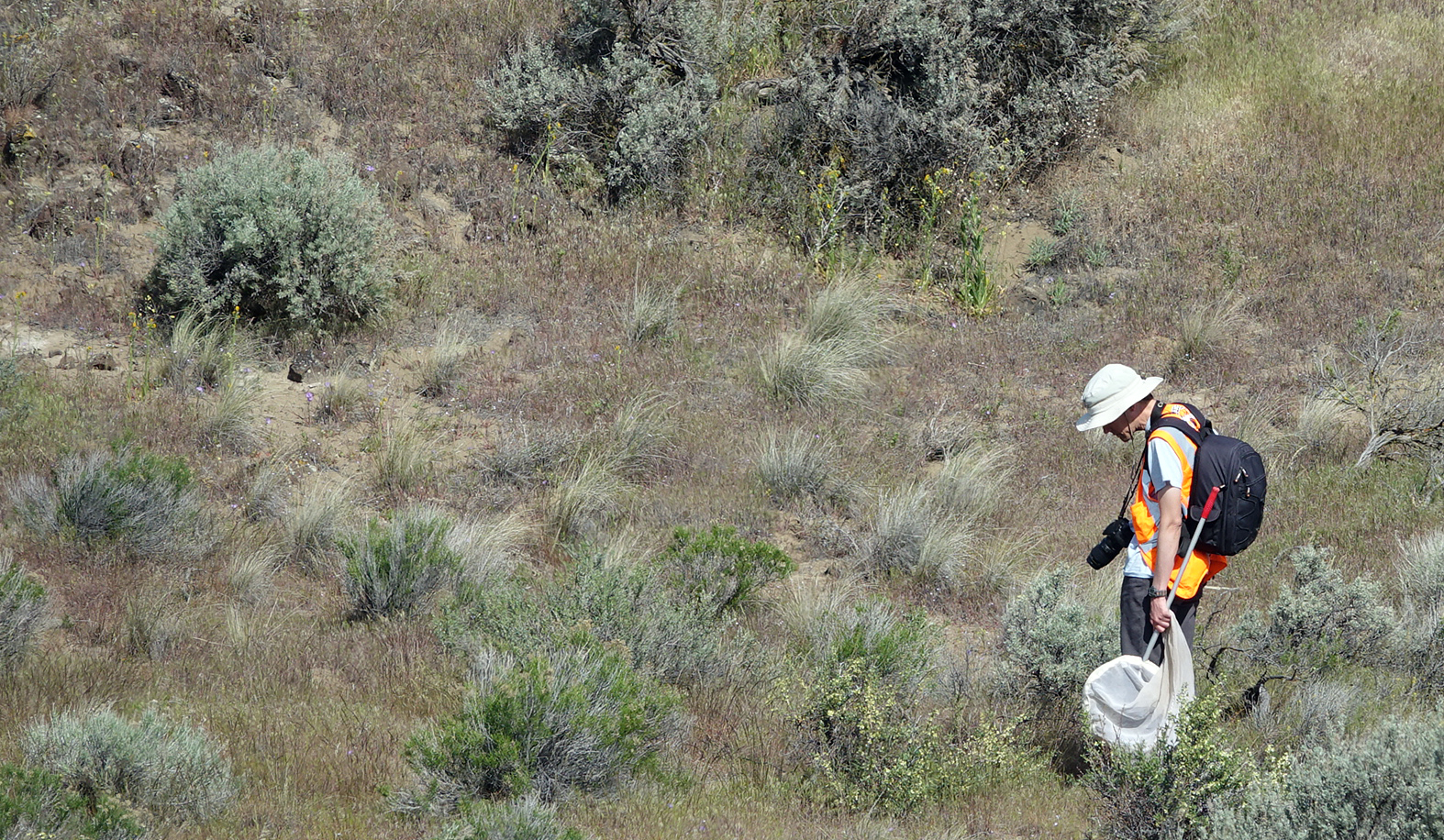
Above: Joel Gardner, insect museum collection manager at Washington State University, scans the flowering scrub for native bees.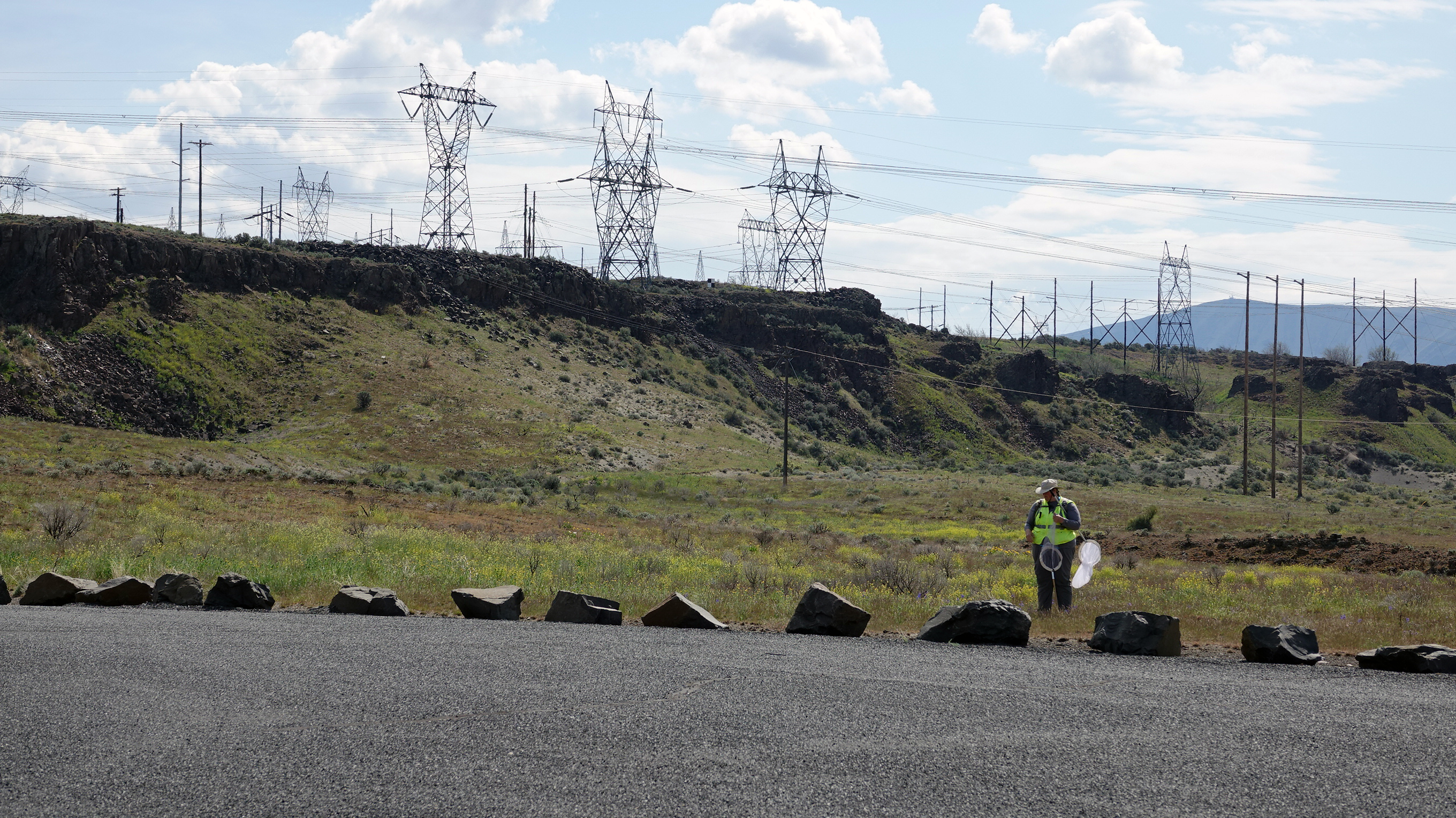
Above: Karla Salp, spokeswoman for the state Department of Agriculture, searches for native bees to collect near the transmission corredor that carries electricity from Wanapum Dam.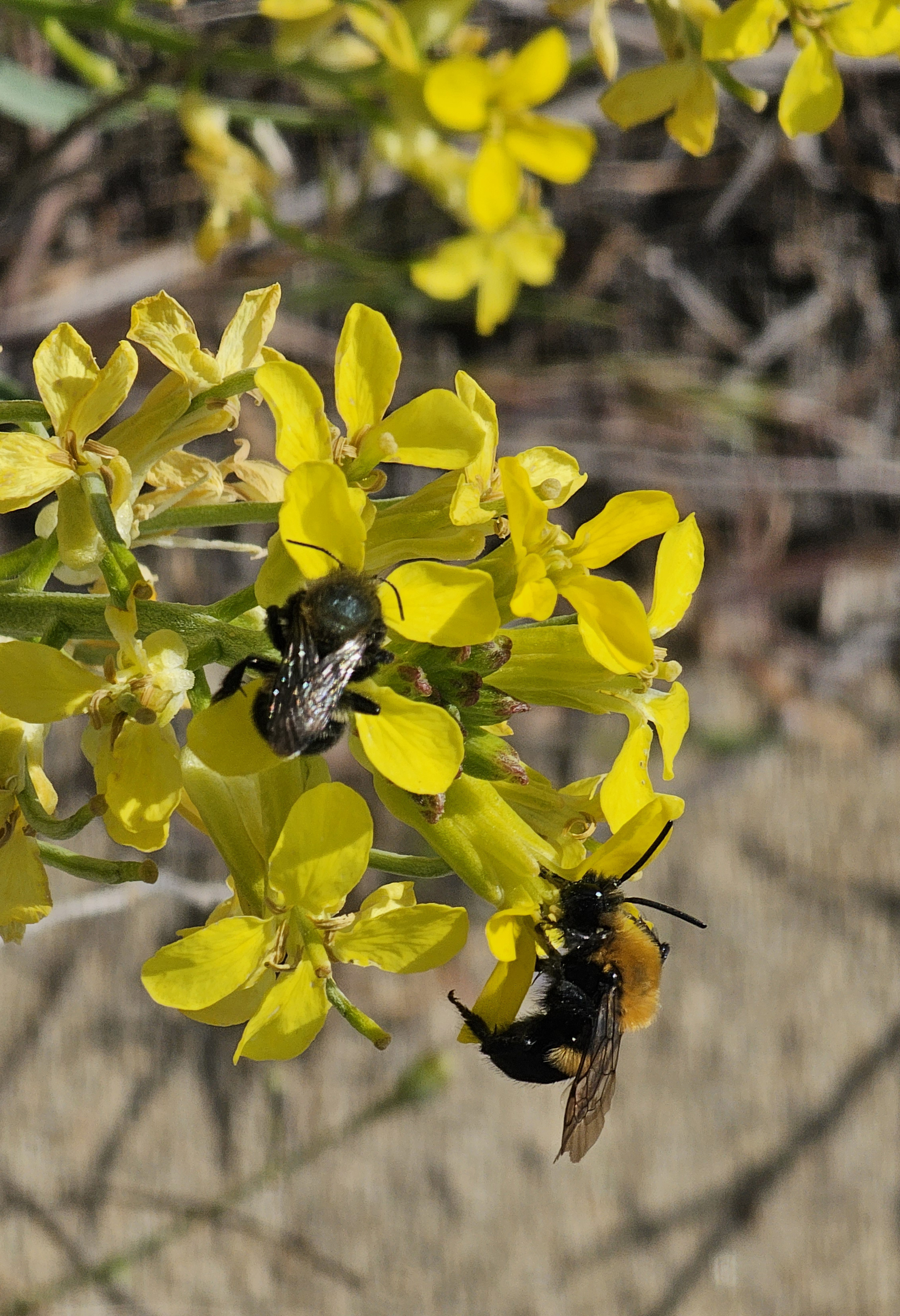
A mason bee (left) and a mourning bee buzz around a wallflower bush for a taste of nectar. In the process, they spread the flowers’ pollen. Photo by the Washinton State Department of Agriculture.
When you subscribe to the blog, we will send you an e-mail when there are new updates.